
Lighting Control in Scottsdale, Arizona
Make the right lighting easy to find, from a bright kitchen work surface to a relaxed evening setting across your Scottsdale home.

Automate Lighting
Lighting that follows the room’s purpose
A beautiful room needs more than an on switch. Task lights, decorative fixtures and accent lighting have different jobs, and the balance changes as daylight moves across the house. AV By Design plans lighting control in Scottsdale around the fixtures, finishes and activities that make each room distinct.
With well-chosen scenes, one button can set several lighting groups to appropriate levels. You can still make individual adjustments. The goal is a home that feels comfortable and intuitive at breakfast, while working and when friends arrive after sunset.
Give each scene a clear job
Imagine moving from meal preparation to dinner without walking through the house adjusting six switches. A cooking setting can emphasize counters, while a dining setting gives the table and surrounding room a softer balance. An evening pathway can serve the rooms you cross without lighting the whole house.
Choose familiar names and keep the first set of scenes small. A keypad by the main entry has a different job from one beside the bed. Review button labels, how an individual light is adjusted and what happens when someone changes a scene manually.
Plan your Scottsdale home technology project
Share your room photos, plans and priorities with Audio Video by Design. We can help define the equipment, wiring and controls your Scottsdale home needs.
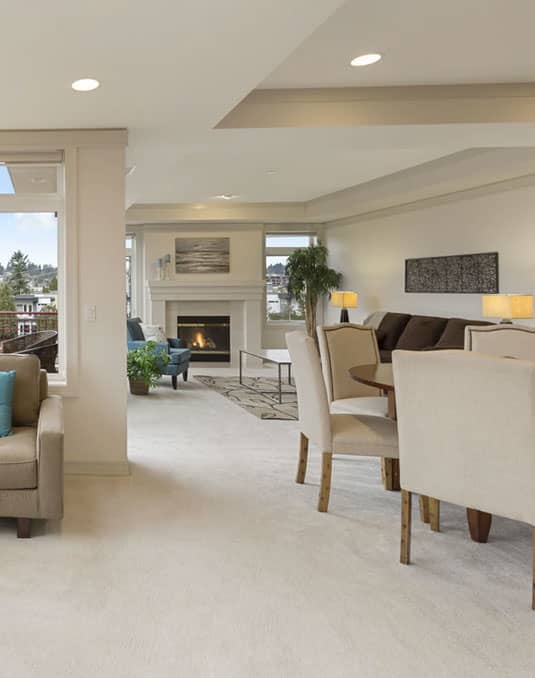
Make bright days and evenings work together
Large windows can make a Scottsdale interior feel very different by late afternoon. Consider the view from the seating area, reflected light on a television and the brightness of adjoining rooms. Lighting and shade settings can be coordinated where supported, so the room remains useful as exterior light changes.
At night, lower accent lighting may create a welcoming setting while leaving adequate light at stairs, counters and circulation routes. Good control preserves these distinctions instead of dimming every circuit to the same level.
Three parts of a useful lighting plan
Fixture selections and control decisions belong in the same conversation. Gather lighting schedules or photos of existing fixtures before the consultation.
Group lights by how they are used
Separate task, ambient and accent needs before choosing scenes. Kitchen counters should not depend on the same setting as decorative pendants. Exterior entry and patio lighting also deserve their own discussion, with adjustments that support the activity without unnecessary brightness.
Coordinate early in a remodel or build
Confirm control locations, electrical requirements and any panel space with the project team. In an existing home, inspect the current wiring and multi-location switching before selecting replacements. The plan should identify electrical work, wall repair and programming as separate parts of the scope.
Review the room after dark
A daytime demonstration cannot show every low-light issue. Check the lowest useful level, smoothness of changes and the balance between adjoining spaces. Save settings that suit real activities, then show everyone how to raise or lower a light without changing the whole scene.
Smooth dimming depends on the complete combination
An LED labeled dimmable still needs a suitable control. Fixture drivers, lamp models and circuit loading affect the usable dimming range. Replacing an older lamp with an LED can change how an existing dimmer behaves, even when the light works normally at full output.
For a retrofit, list the fixtures you intend to keep and any flickering, buzzing or lights that drop out at low levels. Reviewing compatibility and testing the chosen combination helps separate a control issue from a fixture limitation. A new keypad alone does not resolve every dimming problem.









Testimonials
What Our Customers
Say About Us
Scottsdale lighting control questions
Can existing lights become part of a control system?
Often, but each circuit and fixture needs review. The dimming method, electrical requirements and available wiring determine which controls are suitable. Some fixtures may work well as switched loads even when dimming is not a practical option.
Can a keypad replace a wall full of switches?
In an appropriate design, a keypad can provide convenient access to several scenes. The underlying electrical loads still need compatible control hardware. The right arrangement depends on the project’s wiring and whether centralized or local controls make sense.
Can lights follow sunset instead of a fixed time?
Supported systems can use an astronomical schedule based on location. Confirm the feature in the proposed platform and choose which lights participate. Keep an accessible override for evenings when the household’s plans are different.
Do I have to use my phone to turn on the lights?
No. Physical controls should remain convenient for normal household use. Apps can add flexibility, but the control plan should also accommodate visitors and anyone who prefers a familiar button at the wall.
A lighting-control consultation connects the look you want with the practical details needed to make it repeatable.
Phone Number
(480) 242-6459Office Address
30249 N. 124th Lane,
Peoria, AZ 85383
SEND US A MESSAGE


