
Residential Services
HVAC Control
HVAC control can save you enough money every year to pay for its self, four times over.
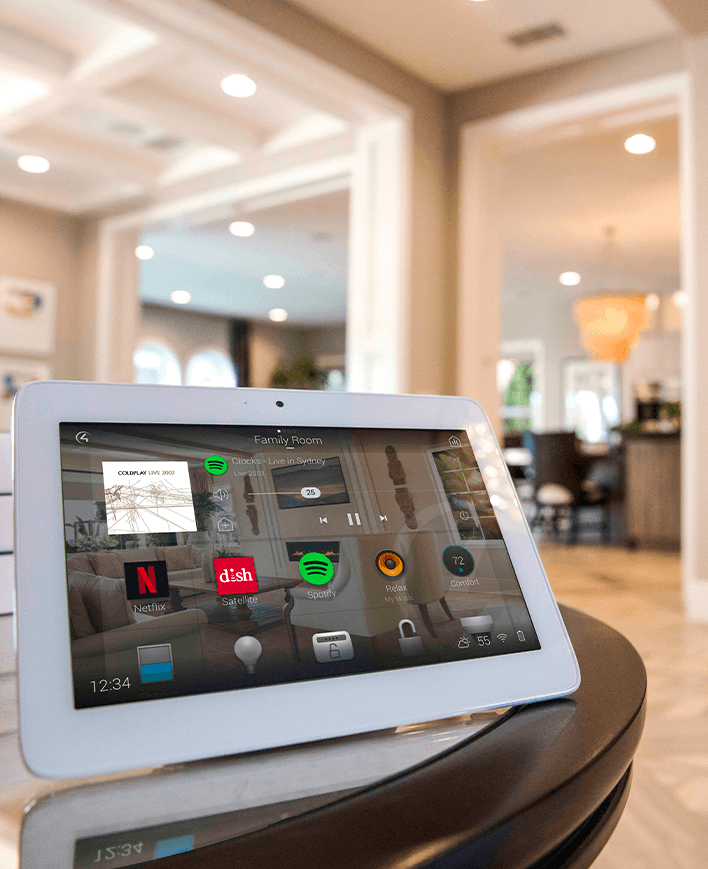
Automate Your AC

Experience the perfect climate at your fingertips with our HVAC control solutions for home automation – optimizing comfort and energy efficiency seamlessly.

Climate control that fits your schedule and your equipment
Smart HVAC control can make temperature adjustments easier to manage across daily life. You might want a different setting while away for the day, a planned return to comfort before getting home, or a simple way to adjust several compatible thermostats before a trip. The useful feature is a predictable routine that still lets someone change the setting at the wall.
In Phoenix, the plan should account for long cooling seasons and rooms with different exposure to the sun. A guest suite that is rarely occupied and a home office used all afternoon may have different priorities, but independent temperature control depends on the home’s actual equipment and zoning. Software cannot turn a single unzoned system into independently conditioned rooms.
Home automation adds coordination. A supported away scene could adjust selected thermostats alongside lighting and shades. The chosen temperatures should fit the household, equipment and recovery time, including the needs of people or pets who remain at home.
Automate Your Home Today!
Transform your living space into a smart home, where convenience and efficiency are just a touch away.
What We Do
HVAC Control & Automation
Leaving on vacation? Set the thermostats to a higher level. You don’t want to pay for all that electricity while you are gone. But, when you come home…. It is hot for hours. Not anymore. Log into your home from the airport and set the temperature to a comfortable level. Now, you have saved money on the electric bill and have a comfortable home to return to. Vacations, in conjunction with the daily automation features included with HVAC control can save you enough money every year to pay for its self, four times over.
Confirm thermostat compatibility before changing controls
Thermostat selection starts with the heating and cooling equipment, not its appearance. Heat pumps, conventional systems, multi-stage equipment and proprietary communicating controls can have different requirements. The wiring and power available at the thermostat also matter; some products need a common wire or another manufacturer-approved power arrangement.
An integration plan should confirm whether the existing controller can be retained and what the home automation platform can actually read or change. A thermostat appearing in an app does not establish full compatibility. Where equipment-specific controls manage advanced functions, replacing them with a general-purpose thermostat may remove useful capabilities. Coordinate that decision with the HVAC professional responsible for the system.
Reliable connectivity supports remote adjustments, but the heating and cooling equipment still needs appropriate local control. Ask how schedules behave when internet service is unavailable and which features remain accessible at the thermostat. HVAC control integration is also separate from diagnosing a mechanical problem, airflow issue or undersized equipment.
Build a realistic climate-control plan
Bring the thermostat and HVAC equipment model numbers, describe your usual occupancy schedule, and note any rooms that are consistently uncomfortable. These details help separate a control preference from an issue that requires an HVAC assessment.
1. Choose schedules and recovery expectations
Set comfortable occupied and away temperatures, then discuss how long the home needs to recover under typical conditions. Equipment type and outdoor temperature affect that timing. Large changes are not automatically better. Seasonal settings should suit the actual heating or cooling system, with manual overrides available when the household schedule changes.
2. Review zones and sensor locations
List which thermostat serves which area and whether the home has genuine zone-control equipment. Direct sunlight, nearby heat sources and sensor placement can influence temperature readings. Remote sensors may help a compatible system respond to a preferred location, but they do not create new physical zones or repair an airflow imbalance.
3. Agree on scope, accounts and ongoing costs
Thermostat count, wiring access, platform compatibility and programming determine project scope. Identify any remote-service subscriptions and who owns the connected accounts. Keep HVAC installation or repair work clearly identified when it is needed. During setup, review schedules, holds and return-from-travel operation so automatic changes remain understandable.
What We Do
Our Audio Video Services
A fully integrated AV system requires an in-depth design procedure to assure that all of the components
and sub-systems work together properly. Without a proper design, you may be subject to hidden charges later.


AV Design and Installation
A fully integrated AV system requires an in-depth design procedure to assure that all of the components and sub-systems work together properly.
View Service


Home Theater
Love watching movies? Hate going to the theater? Let us show you how we can design and install a state of the art theater in your home.
View Service


Home Automation
“Everybody does Home Automation now. I can even get it through my alarm.” Sound familiar? Can you get Home Automation through your alarm?
View Service


Whole House Audio
Music throughout is an awesome addition to any home. Play your favorite playlist throughout your home while you clean.
View Service


Distributed Video
Every start watching a movie in the family room, then decide to finish it in the master bedroom? Video Distribution fixes this issue.
View Service


Surround Sound
Do you ever think that surround sound is “too loud”? We hear this a lot. However, surround sound is no “louder” than TV sound.
View Service


Surveillance and Cameras
We all hope we never need a camera to record an event around our home. However, far too often, we do.
View Service


Computer Network and Wifi
Whether you have a full home automation system or just kids with electronic devices, the network keeps everything humming.
View Service


Audio Video Service and Repair
Don’t leave your entertainment system to just anyone. Hire the experts to make it right.
View Service


High End Audio
We can design a system that will tickle your ear while stroking your budget.
View Service


Lighting Control
Let your imagination (and a little direction from us) lead you to lighting ecstasy.
View Service


HVAC Control
HVAC control can save you enough money every year to pay for its self, four times over.
View Service


Window Coverings and Motorized Shades
You can open one or all your shades, with just a simple button press.
View Service








Testimonials
What Our Customers
Say About Us
Smart HVAC control questions answered
Will a smart thermostat work with my existing HVAC system?
It may, but compatibility must be checked against the equipment type, stages, wiring and control requirements. Some communicating systems work best with their own controller. The thermostat and home automation integration also need to support each other. Model information is more useful than assuming compatibility from the system’s age.
Can I cool the house before returning from vacation?
Remote adjustment can be available with a supported thermostat, working internet connection and any required account or subscription. Allow realistic recovery time based on the home and outdoor conditions. A recurring schedule may be another option. Keep suitable settings for anything that needs a controlled environment while the house is unoccupied.
Does adding another thermostat create a separate zone?
No. Independent zones require compatible HVAC equipment and a properly designed zoning arrangement. A remote sensor may change which temperature a system responds to, but it does not independently direct conditioned air to a room. Discuss uneven temperatures with an HVAC professional before expecting an automation change to solve them.
How much energy will HVAC automation save?
There is no fixed result for every home. Savings depend on previous habits, equipment, climate, occupancy and the settings used. ENERGY STAR certification can help identify thermostats with independently demonstrated savings, but it is not a promise of a particular bill reduction or payback for an individual installation.
Will the thermostat still operate without the internet?
Many thermostats retain local operation, but schedules and remote features vary by product and system design. Confirm the selected model’s behavior before installation. A loss of internet access, a loss of network connectivity and a power failure are different events; none should be treated as the same operating condition.
Good climate-control planning balances comfort, equipment compatibility and sensible expectations. These answers can guide the conversation before a thermostat or automation platform is selected.
Audio Video by Design has more than 20 years of audio video experience. Learn about our team and explore our project gallery before planning your next step.
Phone Number
(480) 242-6459Office Address
30249 N. 124th Lane,
Peoria, AZ 85383
SEND US A MESSAGE


