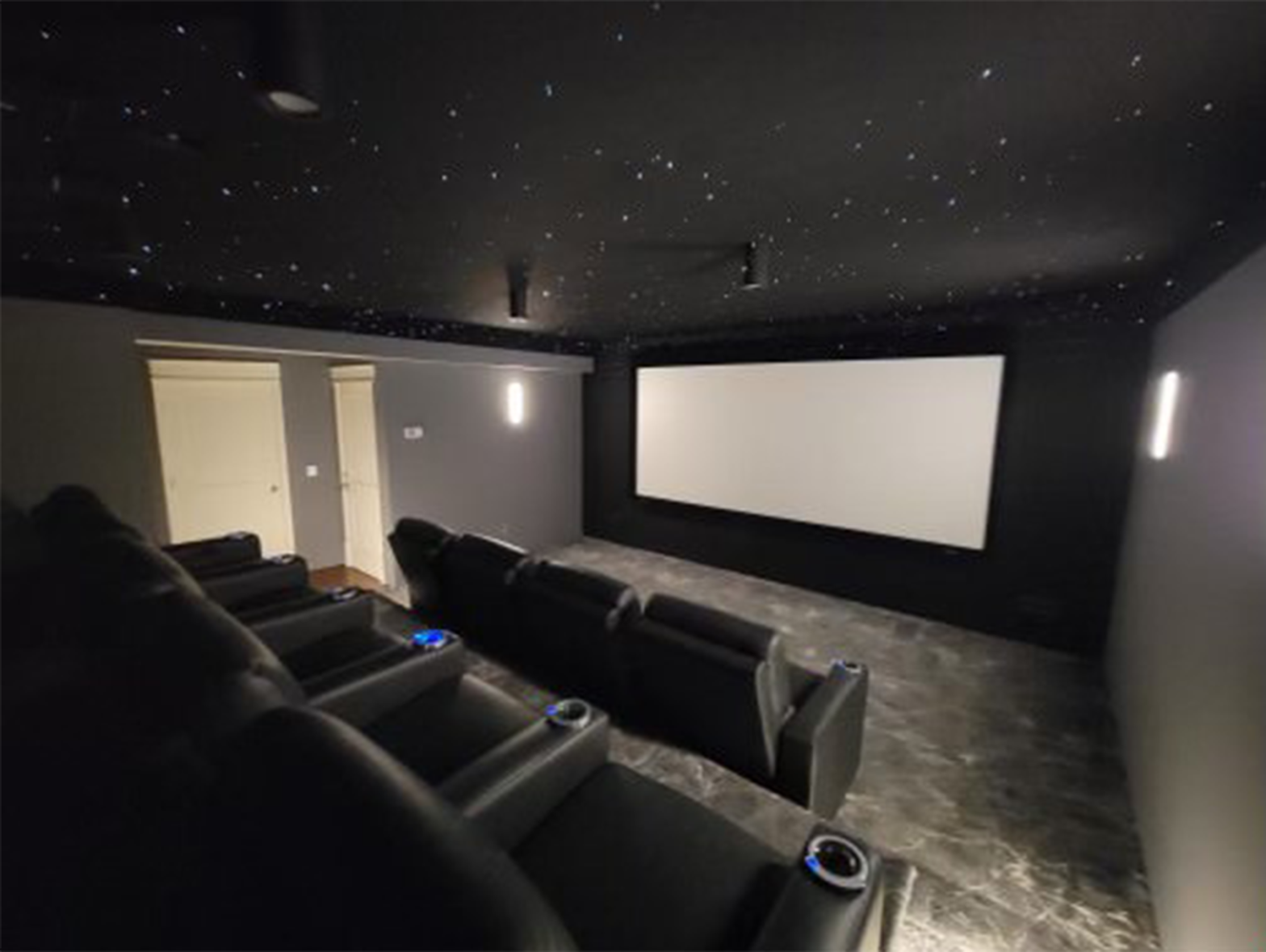
 Many homeowners want the full movie experience – big screen, immersive sound, beautiful lighting – without sacrificing the warmth and comfort of a living room. The good news is that modern media room design no longer requires heavy equipment, dark walls, or turning your space into a theater. With thoughtful choices, your living room can look elegant during the day and transform seamlessly into a media space when it’s time to wind down.
Utilizing Hidden Technology Is Key When Developing a Media Room Design
Most people don’t want speakers dominating their décor or a massive screen taking over the room. That’s where hidden and low-profile technology makes all the difference. In-ceiling speakers blend naturally with existing fixtures, while low-profile soundbars provide quality audio without visual weight. When designing a media room, considering discreet placement early in the process keeps the room feeling open and bright.
Motorized shades, concealed wiring, and sleek AV furniture also help maintain a clean look. This lets the space function as a living room first and a media room second—not the other way around.
Choosing the Right Display for Your Media Room Design
A room that needs to feel welcoming during the day shouldn’t rely on a display that looks out of place when it’s turned off. Many homeowners prefer frame-style TVs that resemble art, or low-glare displays that blend into the background until movie time. For those who want a cinematic screen without the visual footprint, retractable projectors or short-throw systems create big images without taking over the entire wall.
The goal when designing a media room is to avoid anything that becomes a visual anchor when the space is being used for everyday living.
Lighting Sets the Mood for Both Day and Night
Lighting plays a major role in designing a media room that feels versatile. During the day, the room should feel bright and inviting. At night, the lighting should support the movie experience without introducing glare. Layered lighting—such as dimmable overheads, accent sconces, and soft under-cabinet or shelf lighting—creates flexibility without clutter. When these elements are tied into a simple scene controller, the entire room adjusts with a single touch.
Media Room Furniture That Supports Both Comfort and Acoustics
You don’t need theater seats to create a great viewing experience. Sofas, sectionals, and even lounge chairs can work well as long as the seating is positioned thoughtfully. Soft furnishings naturally help with acoustics, reducing echo and improving clarity. Arrange seating so the screen is visible from the main gathering spots without requiring the room to be rearranged each time.
A Media Room Design That Works for Everyday Life
Designing a media room is ultimately about balance—technology that disappears when not in use, lighting that adapts, and furnishings that feel like home. When everything works together, your living room can shift from daytime comfort to nighttime entertainment with ease.